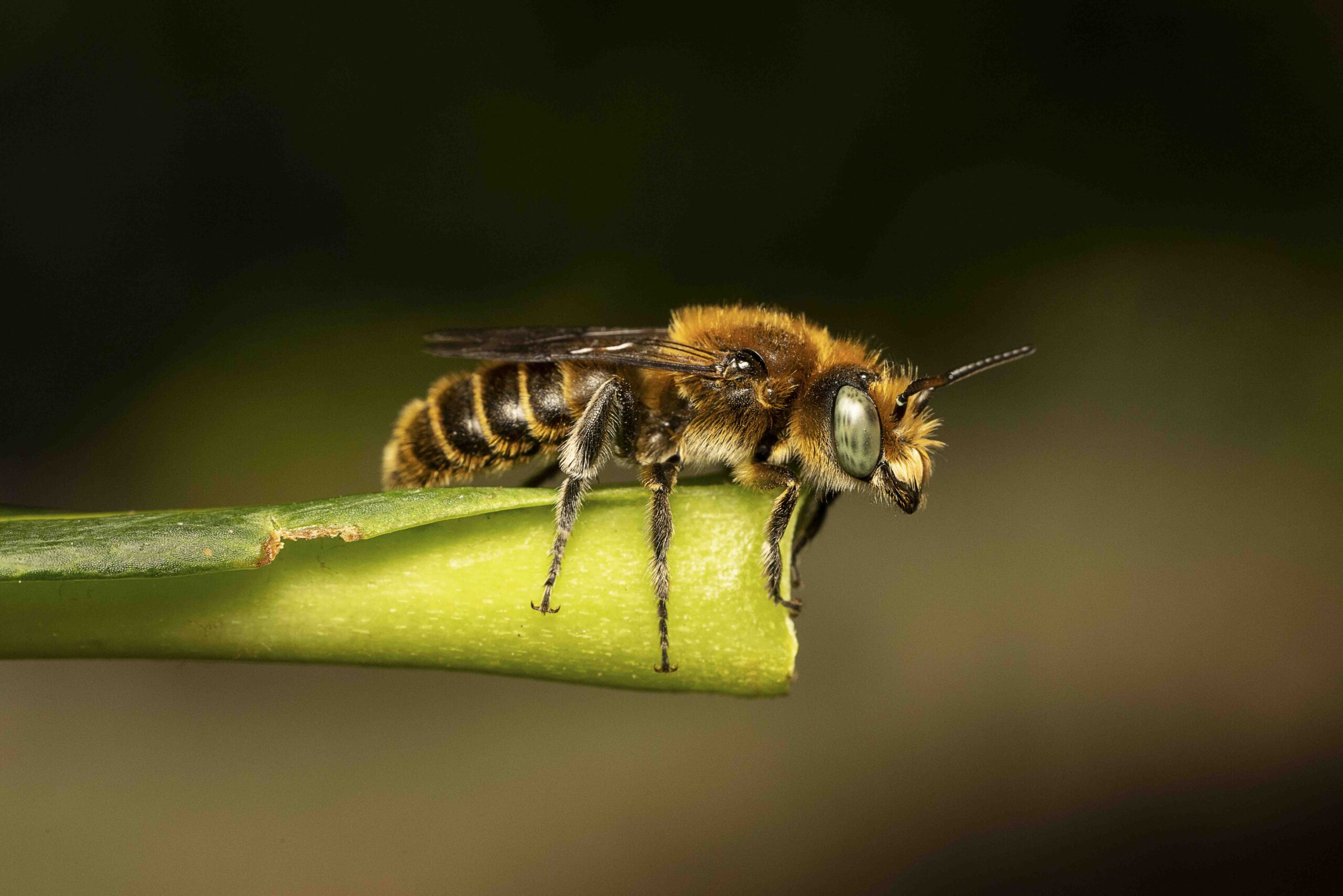

"The sense of wonder that nature instills is a gift to cherish.”
- Rachel Carson
Unveiling the Wonders of Wild Bees in Luxembourg
“All good things are wild and free.”-Henry David Thoreau. Welcome to the beelibre project Species Guardians of Biodiversity Citizen Science Guardians of Biodiversity Pollinator conservation Taxonomy The beelibre project is a “one-stop shop” platform for information on the local wild bee fauna of Luxembourg. We sincerely hope you enjoy our content, learn something new and spread the knowledge. “Little drops of water make the mighty ocean.”-Julia Carney
Our mission ABOUT US Protecting and studying wild bees in Luxembourg. Events... Our goal is to help fill in some of the most important information gaps on local wild bee biodiversity, lay the foundations for the development of new advancements in insect monitoring and promote social change in favor of local pollinator groups.

Wild bee species in Luxembourg

In biology, the term  “species” commonly refers to a group of organisms sharing key traits and a common gene pool that are capable of interbreeding. Currently, Luxembourg is considered to be home to over 300 wild bee species, but ongoing research may refine classifications and potentially discover new populations, redefining how we perceive local wild bee diversity.

Classification

Classification

Taxonomy is the science of classification and categorization. When applied to biological research, it commonly refers to the scientific study of naming, describing and classifying organisms.
Currently, the wild bees of Luxembourg can be classified in 33 different fundamental categories or “genera”, all of them with their unique characteristics, behaviors and life history traits.

Discover our work

Discover our work

The hidden world of wild bees in Luxemburg

Wild bees and pollination

Pollination is the transfer of pollen between plants, enabling reproduction and sustaining life on land. Many plants rely on insect pollinators, especially wild bees, which form mutualistic relationships with their hosts, shaping each other’s evolution

What are DNA barcodes?

Barcodes are short fragments of DNA from standardized regions of the genome. Since each species has its own barcode, they serve as a sort of “fingerprint” that scientists can trace to find out the identity of an organism.

Beelibre News

Follow us on instagram